
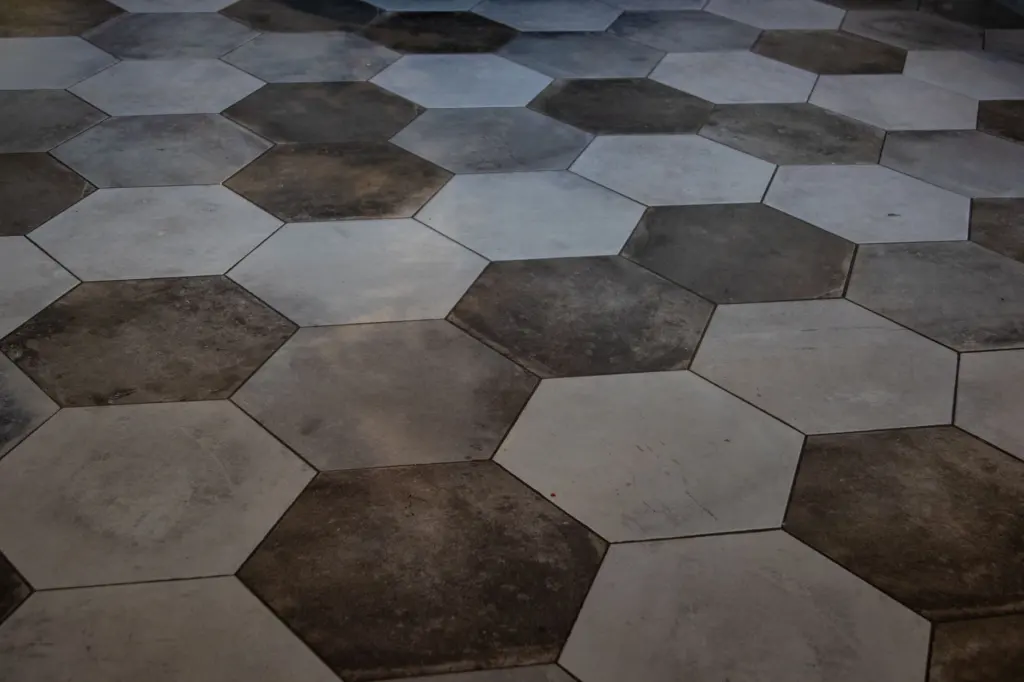
For wet, muddy sites, perforated plastic interlocking floor tiles for temporary shelter are the best fit, because water drains through them. Solid PVC or cushioned tiles suit firmer, drier sites.
Tiles are one layer within emergency shelter flooring for displaced families. When a budget will not stretch to tiles, plastic sheeting as floor in emergency shelter is the simpler fallback. This guide compares the main tile types by material, size, drainage, price and fit for a tent or other temporary shelter.
How to choose tiles for a tent or temporary shelter
No single tile suits every shelter, so the options below are grouped by material and not ranked. Four criteria decide most choices.
- Ground conditions. Mud and standing water call for tiles with drainage holes or an open grid. Firm, dry ground gives more freedom to use solid or cushioned tiles.
- Material. Polypropylene, PVC vinyl and foam-like tiles behave differently. They vary in toughness, cleaning, fire resistance and cushioning.
- Setup effort. Snap-together tiles that need no tools or glue suit households laying their own floor. Heavier or thicker tiles take more carrying and more joins.
- Buying route. Retail packs suit a single household. Bulk factory pricing suits agencies that can meet a minimum order.
Tile options by material
The options below are ordered by how much they cope with wet ground, not by quality.
Perforated plastic grid tiles
These are the most natural fit for a muddy tent floor. A retail listing for the SnapLock DuraGrid describes plastic tiles that snap together without tools or glue. They have a free-draining design that prevents water buildup and a slip-resistant surface. Each tile measures 12 in x 12 in and the pack holds 40 tiles.
A flooring supplier’s roundup of plastic tiles for events describes a similar portable outdoor tile. It has drainage holes that let water flow downwards and an anti-slip diamond top. The tiles snap together one by one but can also be rolled up and down for quick setup and takedown.
The limit is intent. Both products are sold for decks and events, not for relief use. Small tiles also mean many joints to connect across a family-sized floor.
Polypropylene tiles
Polypropylene is a tough plastic that suits rough outdoor handling. The same supplier describes the RaceDeck tile as made from high-quality, no-break polypropylene. A listing on a manufacturer directory offers interlocking polypropylene tent flooring, sold for grass turf protection, at US$21.9 per square metre with a minimum order of 100 m².
This route suits agencies and large camps that can buy in bulk. A single household cannot meet that minimum order. Turf protection also means the design was made for events on grass, not for displaced families.
Solid PVC vinyl tiles
Solid vinyl tiles trade drainage for durability and cleaning. The manufacturer MotoTile lists MotoMat tiles of 500 x 500 mm and 12 mm thick, made from recycled PVC vinyl. It describes them as durable, fire resistant and suitable for all weathers and extreme temperatures. Its MotoLock HD tile is 495 x 495 x 7 mm and is described as resistant to abrasion, impact and the penetration of liquids, including oils and solvents.
The supplier roundup also describes a leather-effect PVC tile that is 1.66 x 1.66 feet and 5 mm thick. It is non-absorbent and can be cleaned with a mop. Solid vinyl suits shared or longer-stay shelters where fire safety and cleaning matter most. On boggy ground, check how the tile handles water before relying on it.
Cushioned and raised tiles
Cushioned tiles are about comfort underfoot. The supplier says StayLock Orange Peel tiles have the cushion of foam but are tough like rubber. It adds that they can be installed over any flooring surface, including concrete and carpeting. That points to dry, covered floors, not open mud.
Raised designs address air and moisture differently. The Max Tile has a 3 mm vinyl laminate top bonded to a polypropylene base tray. Its raised build lets air flow underneath the tiles.
Comparing tile types side by side
The table below puts the main tile types on common criteria so the trade-offs are visible at a glance.
| Tile type | Material | Key properties | Planning use |
|---|---|---|---|
| MotoMat | Recycled PVC vinyl | 500 x 500 mm, 12 mm thick; fire resistant; suited to all weathers and extreme temperatures | Shared or longer-stay shelters where fire behaviour matters |
| Leather-effect PVC | PVC | 1.66 x 1.66 feet, 5 mm thick; non-absorbent; mop-cleanable | Dry interiors that need frequent cleaning |
| RaceDeck | Polypropylene | No-break material | Rough handling and repeated assembly |
| StayLock Orange Peel | Foam-like, rubber-tough | Cushioned; can be laid over concrete or carpeting | Dry, covered floors where comfort matters |
| Max Tile | Vinyl laminate on polypropylene base | 3 mm laminate top; raised base with airflow underneath | Floors where air circulation under the tile matters |
| Portable outdoor tile | Interlocking plastic | Drainage holes; anti-slip diamond top; can be rolled for setup | Wet or muddy tent floors that are moved often |
Figures come from the manufacturer’s MotoTile temporary floors page and a supplier’s plastic floor tile roundup.
Price, weight and coverage
Published prices use different currencies and units, so they cannot be compared directly. Treat them as markers for the type of buying route, not as a league table.
- Retail pack. The SnapLock DuraGrid listing shows $148.95 new for the 40-pack, which works out at $3.72 per square foot. A used 40-pack listing shows $3.22 per square foot. The pack weighs 32 pounds.
- Single-tile pricing. MotoTile lists a MotoMat Black Diamond Plate anti-fatigue tile, 470 x 470 x 12 mm, at £4.98 including VAT per tile. That suits topping up a floor rather than buying a full shelter’s worth at once.
- Bulk factory pricing. The polypropylene tent flooring listing quotes US$21.9 per square metre at a minimum order of 100 m². It suits agencies that buy at volume.
Weight matters when floors are moved by hand or vehicle. The 32-pound pack is the only pack weight published here, so ask for pack weight alongside thickness before ordering. Thickness runs from 5 mm in the leather-effect PVC tile to 12 mm in the MotoMat. For tight budgets, low cost flooring for emergency housing covers cheaper materials worth weighing against tiles.
Mud, wet and uneven ground
Perforated tiles do work on muddy ground, because they are built to let water through. The SnapLock listing describes a free-draining design that prevents water buildup, and the portable outdoor tile has drainage holes that let water flow freely downwards. A raised base such as the Max Tile also lets air flow underneath.
MotoTile describes its MotoMat tiles as suitable for all weathers and extreme temperatures, which supports use in changing conditions. These features deal with water and air, not with slopes or hollows. Product descriptions do not claim that tiles level rough ground, so clear and firm the site before laying them. Choose perforated tiles where mud is the main problem, and add a firm base before laying where the ground is lumpy.
Installation speed and heavy use
Snap-together tiles are quick to lay because they connect without tools or glue. A family can lay a floor by clicking tiles together by hand. The supplier notes that the portable outdoor tile can be rolled up and down for quick setup and takedown, which helps when a shelter is moved. Total time depends on floor area and tile size, and the pack does not quote a figure.
Heavy use tests three things: wear, spills and fire. MotoLock is described as resistant to abrasion, impact and the penetration of liquids, including oils and solvents. The leather-effect PVC tile is non-absorbent and mop-cleanable, which helps in busy shared spaces. StayLock combines foam-like cushion with rubber-like toughness, and MotoMat is described as fire resistant.
Frequently asked questions
Can interlocking tiles go over concrete or carpet?
Yes, for some products. The supplier says StayLock Orange Peel tiles can be installed over any flooring surface, including concrete and carpeting.
Which tiles are fire resistant?
MotoTile describes its MotoMat vinyl tiles as durable and fire resistant. Check the rating of any other product before relying on it in a crowded shelter.
Which tile is easiest to keep clean?
Non-absorbent PVC is the easiest to keep clean. The leather-effect PVC tile is non-absorbent and can be cleaned with a mop, and MotoLock resists the penetration of liquids, including oils and solvents.
Do snap-together tiles need glue or tools?
No. The SnapLock listing says its tiles snap together without tools or glue, and the portable outdoor tile snaps together one by one.