
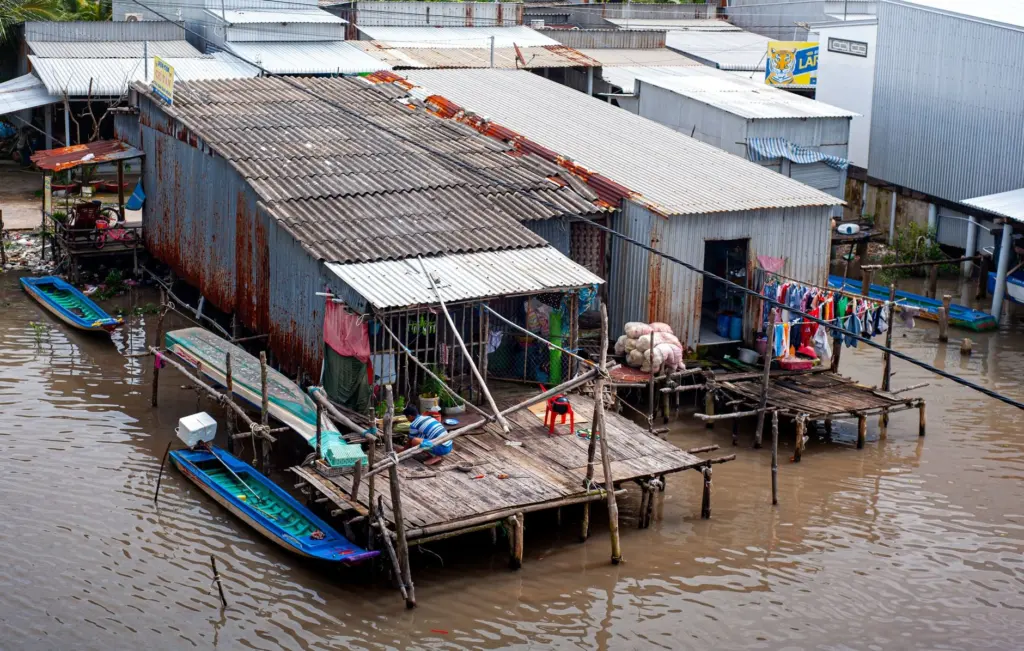
Quick answer: The best flooring for shelters in flood prone areas depends on how deep the water gets and whether it will enter the shelter. Keep water out where flooding is shallow, and plan replaceable floor layers where it will come in.
This guide supports our wider overview of emergency shelter flooring for displaced families. It focuses on the water-specific problems: rising moisture, standing water, mud and cleaning after the flood recedes.
What decides the flood strategy
Four conditions steer the choice of floor more than the material itself. Check them before ordering anything.
- Flood depth. Flood-proofing measures are most effective where flood depth is low. Where depth is uncertain or likely to be high, treat a sealed floor as a weak primary defence.
- Whether water will enter. Dry floodproofing aims to keep the water out of the structure. Wet floodproofing accepts that water enters and limits the damage it does.
- Cleaning capacity. Letting water in means a large cleaning job afterwards. A site without labour, clean water or time for that work should lean towards keeping water out or towards disposable layers.
- Ponding exposure. Some shelters or blocks sit where water gathers. These need protection at site level as well as at floor level.
Comparing the main approaches
The table sets the three common approaches against the conditions above. Use it to narrow the options, then confirm against the actual flood record of the site.
| Approach | Suits | Main limit | Planning use |
|---|---|---|---|
| Dry floodproofing (sealed floor and walls) | Areas where flood depth is low | Watertight only up to the expected flood height. Floors may buckle if design loads are exceeded. | Use when the likely flood height can be predicted and the shelter built to it. |
| Wet floodproofing with sacrificial layers | Shelters where water will enter anyway | Needs a lot of cleaning. Floodwater can bring sewage or chemicals inside, and the shelter may be uninhabitable for a period. | Choose floor layers that can be stripped and replaced after each flood. |
| Levee around the shelter or block | Shelters most prone to flooding or ponding | Protects specific shelters or blocks rather than the whole site. | Add where the same spots flood repeatedly, alongside a floor measure. |
The approaches and limits above come from the UNHCR humanitarian risk compendium and the Climate Technology Centre and Network guidance on disaster-resilient buildings.
Raise the floor or use a barrier
Raise the floor when the water is likely to be deep or to stand for long. Use a barrier when flooding is shallow and the site can predict its height. A barrier only protects up to the height it was built for, and flood-proofing performs best where depth is low. If the depth is unknown, a floor lifted clear of the water is the safer default.
The two are not rivals in every case. A raised platform changes how the shelter meets the ground, while a barrier changes what the floor does when water arrives. Construction options, platform types and materials are covered in our guide to a raised floor for emergency shelter.
For a ground-level floor, the sacrificial approach is a practical fallback. Sacrificial layers are designed to be replaced after flood events, so the structure beneath is not asked to survive the water unchanged.
Stopping moisture rising into the floor
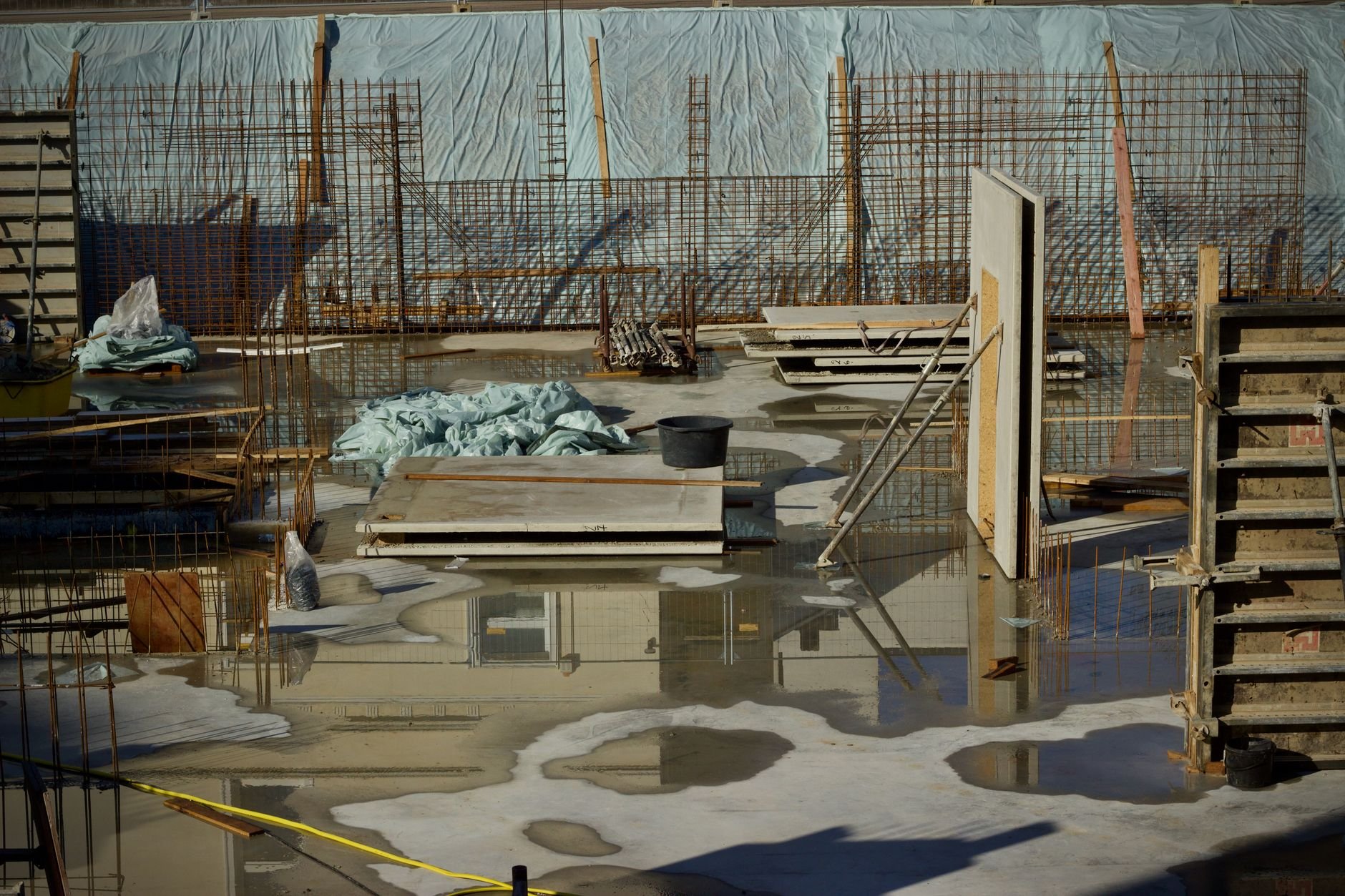
Moisture is stopped by a continuous waterproof layer under or within the floor, not by the floor covering on top. Dry floodproofing seals surfaces with waterproof coatings or impermeable membranes, and the goal is that the water cannot enter the structure. Plastic and geotextile sheets appear among the barrier materials the UNHCR compendium lists, alongside clay, mud, concrete, brick masonry and steel.
Choosing and specifying sheeting
Plastic sheeting is the usual barrier material in relief work because it is light and widely stocked. Its performance still depends on specification, so do not guess at thickness or grade. The IFRC publishes a guide to the specifications and use of plastic sheeting in humanitarian relief (2007), hosted by the Shelter Cluster working group on sustainable solutions. Match the sheeting you procure to the specification in that guide rather than to a supplier’s general description.
Our page on plastic sheeting as floor in emergency shelter goes into how sheeting is used as a floor surface, which is a different job from acting as a hidden moisture layer.
Mud control in relief camps
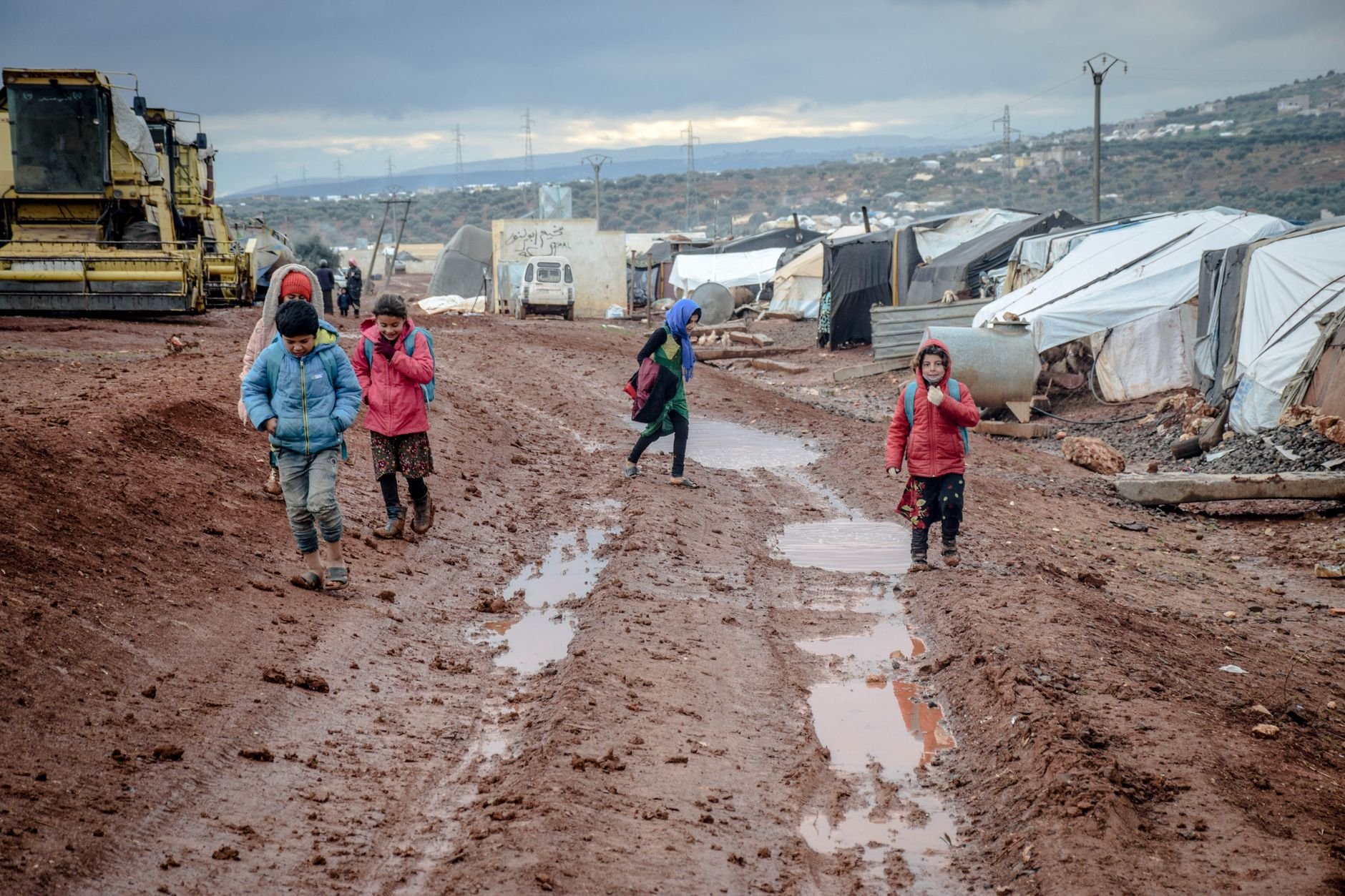
Mud control starts outside the shelter, because mud carried in on feet undermines any floor. The aim is to keep water from ponding around shelters and to give people firm surfaces to walk on between them.
Protecting the worst-hit shelters
Levees can be erected around the shelter or block where structures are most prone to flooding or ponds. This suits camps where the same spots flood every season, because the effort goes where the water actually collects. Where the problem is general wetness across the site, a levee around a few shelters will not solve it, and the movement routes need attention instead.
Diverting water away
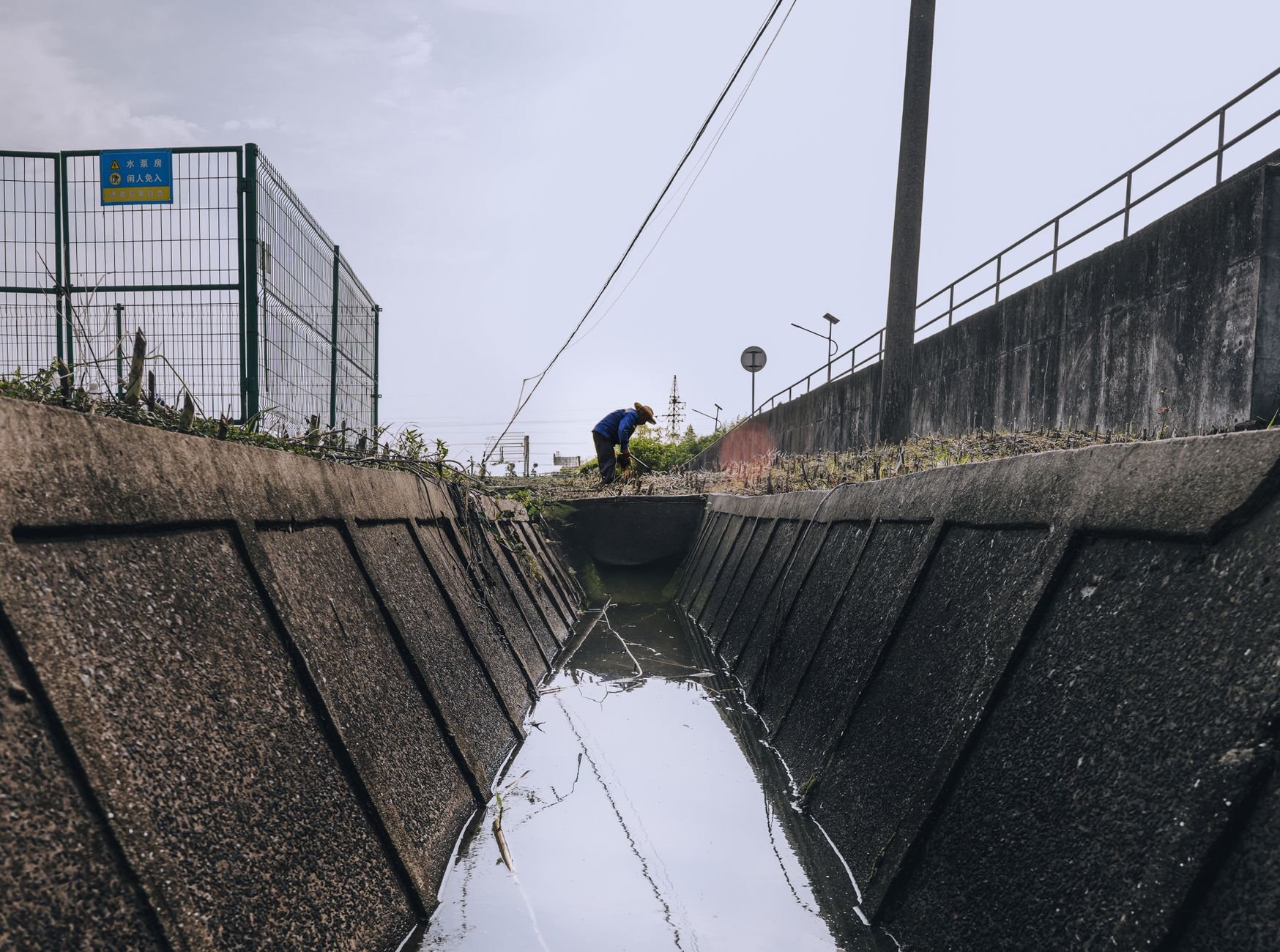
Channels that carry water away from shelter footprints reduce the standing water that turns ground to mud. They work together with a levee, and neither replaces a floor measure inside the shelter.
Cleaning and drying after flooding
How hard the cleanup is depends on which strategy you chose before the flood. Wet floodproofing means floodwater still enters the structure, so significant cleanup may be required. The UNHCR compendium adds that it can lead to contamination inside buildings by sewage or chemical materials, and can leave shelters uninhabitable for a period.
Reuse or replace
Decide this by the likely contamination of the water, not by how the material looks. Where sewage or chemicals may have been in the floodwater, a layer designed to be sacrificed and replaced is the safer choice than a material you must scrub and dry. Materials that were only splashed with clean water are better candidates for drying and reuse. Flood-resistant design makes cleaning and repairing flood damage much quicker and easier, which is a reason to choose washable, replaceable floor layers at the outset.
Re-entry
Do not treat a shelter as ready simply because the water has gone. If floodwater entered, the cleaning and any contamination issue come first.
Matching the floor to the flood
- Shallow, predictable flooding. A sealed floor with a continuous barrier can work, built to the expected flood height.
- Deep or uncertain flooding. Raise the floor, and do not rely on a barrier alone.
- Frequent ponding in known spots. Add a levee and drainage around those shelters or blocks.
- Water will enter regardless. Use replaceable layers and plan the cleaning labour before the next flood.
Frequently asked questions
Does plastic sheeting alone make a floor flood-proof?
No. Plastic and geotextile sheets are one of several barrier materials, and dry floodproofing only holds water out up to the expected flood height. Use the IFRC specification guide for sheeting and pair it with a floor or site measure suited to the depth.
Why are some floor layers made to be replaced?
Sacrificial layers are designed to be sacrificed or replaced after flood events. That protects the structure and avoids trying to clean materials contaminated by floodwater.
Can a floor fail even if it is sealed?
Yes. In dry floodproofing, floors may buckle if design loads are exceeded, so a sealed floor should not be expected to cope with water beyond what it was designed for.
Is a levee a substitute for a better floor?
No. A levee protects the shelter or block most prone to flooding or ponding, but it works at site level. The floor still needs its own response to moisture and water entry.