
| Planning point | Value and condition | Planning use |
|---|---|---|
| Immediate-phase shelter options | 0–72 hours: tarps, tents, quick-deploy shelters | The first floor has to be something that arrives with the shelter and needs no specialist build. |
| Frame tent setup time | Under 30 minutes, staked by a two-person team | A floor that takes far longer to lay than the tent takes to raise will often be skipped, so favour simple layers. |
| Functional life of temporary tents and shelters | 1–5 years, depending on climate and maintenance | If a family may stay for years, plan to renew or upgrade the floor rather than treating the first layer as permanent. |
| Overheating, moisture and cold | Overheating and moisture buildup are more common than cold in most U.S. climate zones | Check moisture and ventilation before buying insulation. Colder sites change the order of priorities. |
| Site condition | A level, well-drained site dramatically reduces problems with structural integrity and water intrusion | Prepare drainage and levelling before choosing a floor material. |
| Structure share of deployment cost | Structure cost is often less than half the total deployment cost | Budget flooring, bedding and site work as real line items, not afterthoughts. |
These figures come from Anzen Housing’s shelter deployment guidance, a secondary source best read as a set of planning cues rather than a standard.
Emergency shelter flooring for displaced families works best when it keeps sleeping space off wet ground, goes down as quickly as the shelter, and lasts as long as the family stays. Choose by the main threat: water, cold or budget.
The reasoning behind that order is set out in the guide to why flooring is important in emergency shelters. The sections below turn it into choices: where to start, how to keep a floor dry and warm, which materials suit which conditions, and how to think about cost for a single household.
Where to start: the three questions that decide the floor
A tent floor is a response to the ground, the weather and the length of stay. Answering three questions in order narrows the field quickly, before any material is compared.
- How long will the family stay? Temporary tents and shelters can remain functional for 1–5 years depending on climate and maintenance, according to Anzen Housing. A family expecting days needs a quick barrier. A family that may stay through a season or more needs a floor that can be repaired, cleaned and eventually replaced.
- What is the ground doing? Dry, level, well-drained ground allows a thin and cheap floor. Waterlogged, sloping or flood-prone ground calls for lifting the floor above the surface, which is a different category of solution.
- What can be supplied now? In the immediate phase, which that guidance places at 0–72 hours, tarps, tents and quick-deploy shelters are the typical options. The first floor is therefore usually whatever can travel with them, with better materials added as supply lines open.
If the aim is to compare materials side by side, the guide to emergency shelter flooring options sets them against each other. If the aim is a decision process rather than a comparison, how to choose flooring for temporary shelter walks through it.
What a bare ground floor does to a family
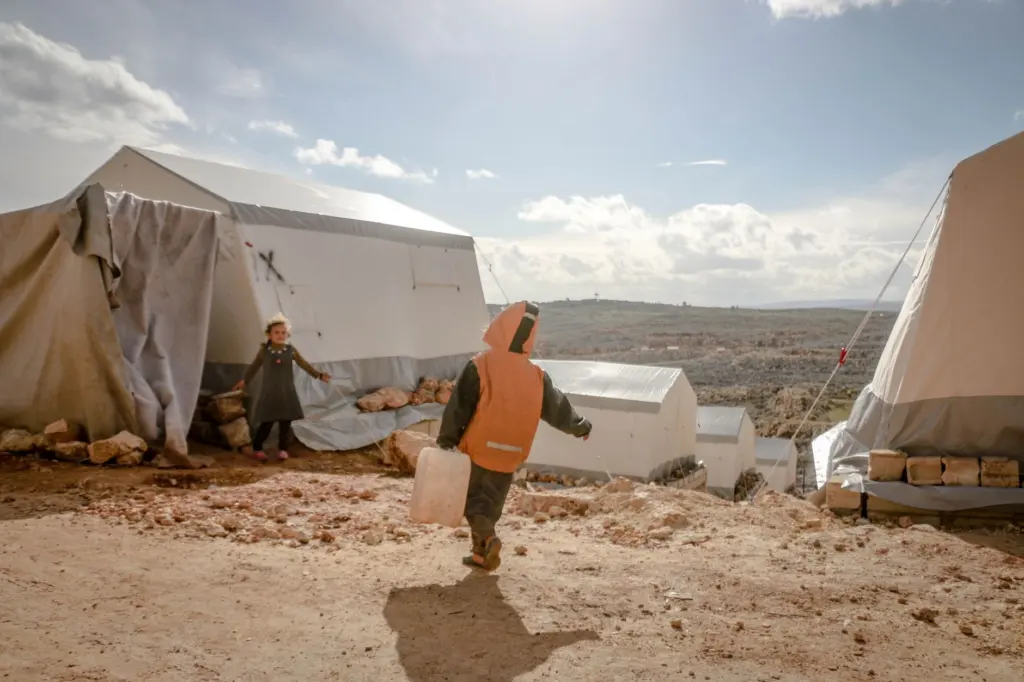
A bare earth floor puts a family in direct contact with whatever the ground holds: water after rain, cold in winter, mud that is carried onto bedding and food. In a tent, where the walls are thin and the floor is the only surface people sit, sleep and prepare food on, that contact is constant.

Moisture is the most consistent problem. Anzen Housing notes that overheating and moisture buildup are more common problems than cold in most U.S. climate zones. That finding is tied to those climate zones, so it should not be assumed everywhere. It does explain why a floor plan that starts and ends with insulation can miss the more frequent hazard. Damp bedding, damp clothing and damp ground all make a shelter harder to live in, long before temperature becomes the problem.
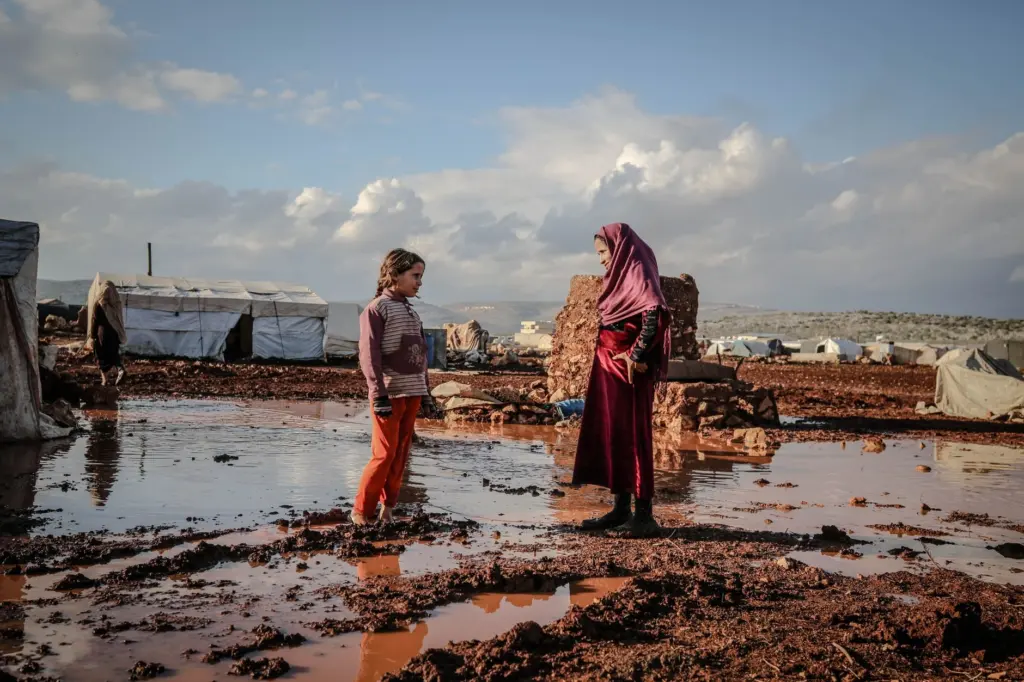
The same guidance links ventilation to health: good cross-ventilation prevents mold and reduces pathogen transmission. For flooring, the lesson is practical. A floor that seals the ground off but also traps humidity beneath bedding can create the damp conditions it was meant to prevent, so the floor and the airflow need to be planned together.
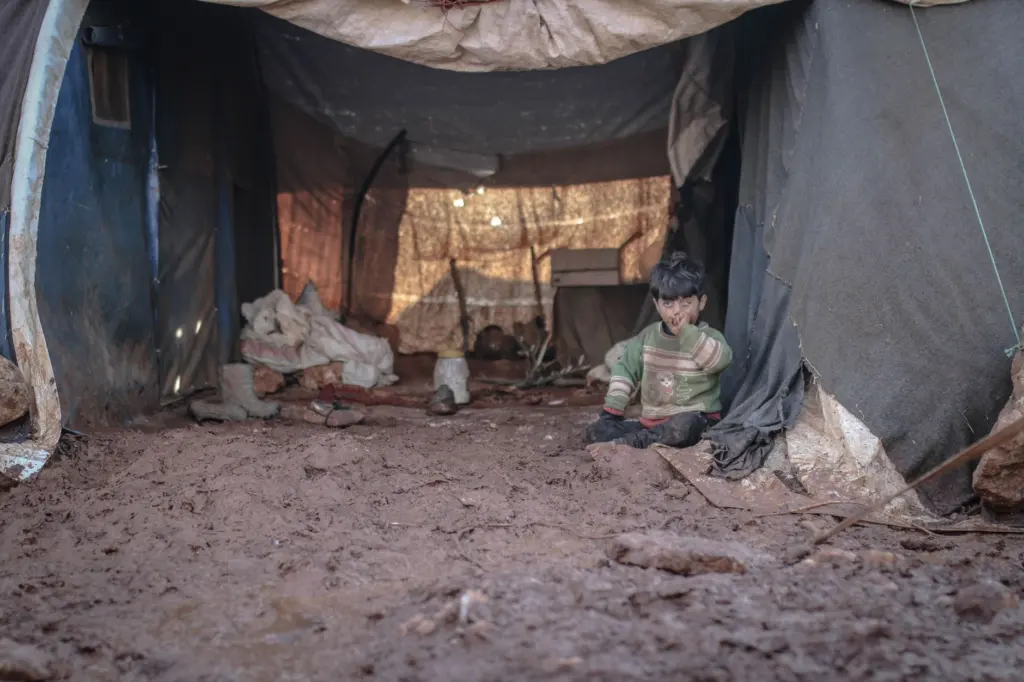
Children are the most obvious case for acting early, because they spend more time at floor level than adults do. A mat, sheet or raised surface between a child and wet earth is a modest intervention and a straightforward one to justify. For a household with infants or older relatives, the sleeping area is the first part of the floor to protect.
Keeping a displaced family’s shelter floor dry
Dryness comes from three layers of decision: where the shelter stands, what separates bedding from the ground, and how water leaves the site. Skipping the first layer makes the other two work harder.
Start with the site
Anzen Housing’s guidance states that a level, well-drained site dramatically reduces problems with structural integrity and water intrusion. That is the strongest argument for treating site selection and preparation as part of flooring rather than a separate task. A well-chosen pitch lets a thin floor perform like a better one, while a poor pitch can defeat an expensive floor.
Where families have no choice of site, small changes still help. Shaping the ground so that water runs away from the tent, rather than under it, costs labour more than money. Keeping the footprint level also stops bedding from sliding and pooling water at the low edge. These are judgement calls rather than sourced specifications, and local site conditions should override them.
Separate bedding from the ground
A moisture barrier is the simplest way to separate people from damp earth. The guide to plastic sheeting as floor in emergency shelter covers how sheeting is laid and its limits. As a rule, sheeting suits dry or lightly damp ground and short stays, and it is the usual first layer because it is light, rolls up for transport and can be deployed without tools.
Sheeting alone has a weakness. It stops moisture rising, but it can also hold water against it if the ground floods, and it offers no cushioning or insulation. Treat it as the base layer of a floor, not the whole floor, and add mats or a raised platform above it where the ground is persistently wet.
Flood-prone sites
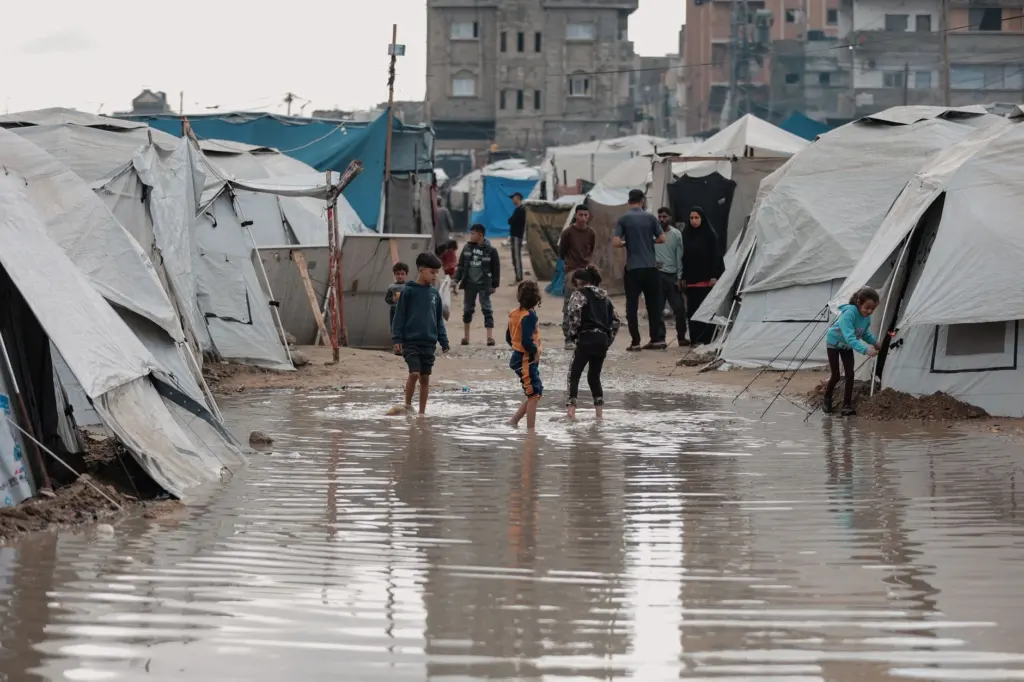
On ground that floods, the floor has to rise above the water rather than resist it from beneath. Raised platforms and drained pitches are the logical response, and the detailed options are covered in the guide to flooring for shelters in flood prone areas.
Where water cannot be drained, moving the shelter is worth weighing against building up the floor. A raised floor on a site that keeps flooding protects the bedding but does not protect access, stored goods or the ground around the tent. Drainage and relocation are decisions for the camp managers, so a family-level floor works best as one part of a site-level answer.
Keeping the floor warm
Warmth comes from separating the body from cold ground and keeping the air in the shelter from losing heat to the floor. Ground contact drains heat, so insulation under bedding often does more than extra blankets alone.
The caution from the earlier section still applies: moisture and overheating are more common than cold in most U.S. climate zones, per Anzen Housing. In a cold climate, the order changes. Insulation moves up the list, but it still needs a dry base, because wet insulation loses much of its value and wet bedding is hard to dry in winter. The guide on how to insulate a tent floor for winter covers layering in detail.
A sensible layered floor, from the ground up, runs as follows.
- Prepared ground. Level it and shed water away from the footprint.
- Moisture barrier. Lay sheeting across the full footprint, turned up at the edges where the tent allows.
- Insulating layer. Add mats, foam or similar material suited to the climate and the budget.
- Bedding. Keep it above the floor layers so that spills and condensation do not soak it.
In hot or humid conditions, drop the heavy insulating layer and keep the raised or ventilated approach. The aim there is airflow and dryness rather than heat retention.
Choosing floor materials
No single material wins in every situation. The useful question is which material solves the worst problem on the site at a cost and effort the household and the responding agency can sustain. Each option below is introduced with who it suits and when to look elsewhere.
Plastic sheeting
Sheeting suits the first days and dry or lightly damp ground. It is quick to spread, light to carry and easy to replace. It is a poor choice as the only layer in a cold or flood-prone setting, and it needs protection from sharp objects and heavy foot traffic. For laying detail, see the guide to plastic sheeting as floor in emergency shelter above.
Pallets and raised platforms
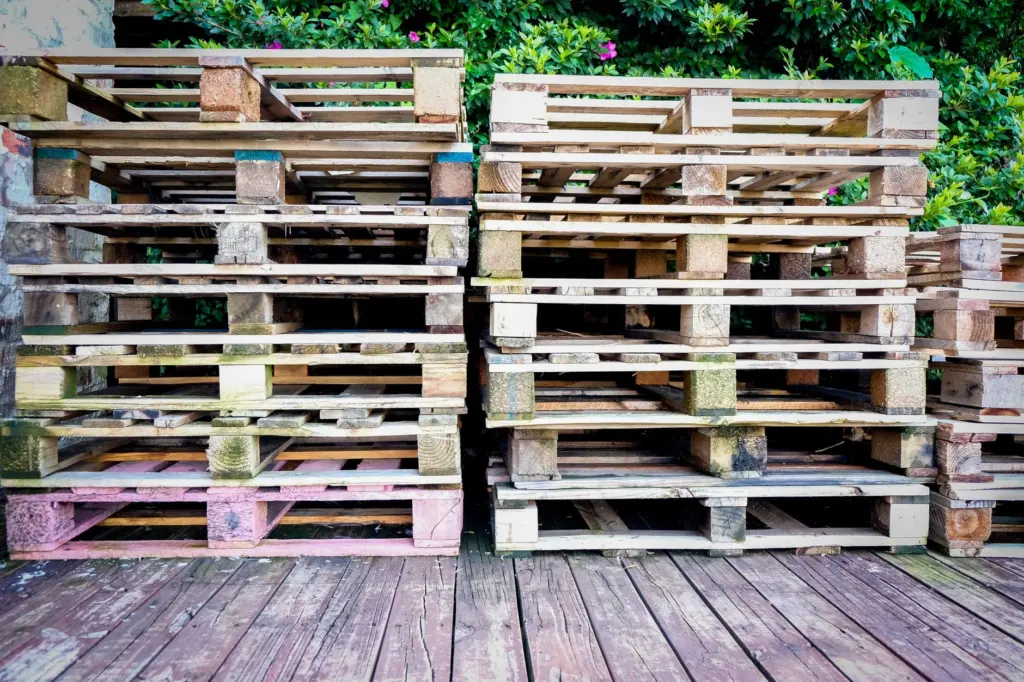
Wooden pallets laid side by side create a raised surface that lifts bedding off wet or cold ground and allows air to move beneath. They suit wet sites and families who need a dry sleeping area, provided pallets are available locally and their surfaces are safe to sit and sleep on. The guide to a raised floor for emergency shelter explains how to build one. Check for splinters, protruding nails and rot before use, and add a mat or sheet on top rather than placing bedding directly on slats.
Interlocking tiles
Interlocking tiles click together into a continuous surface and can be lifted and reused when the family moves. They suit longer stays and shelters where a cleanable, drained surface matters. They tend to need a reasonably level base, and they have to be supplied, so they suit planned responses more than the first hours. See interlocking floor tiles for temporary shelter for the details.
Mats and local materials
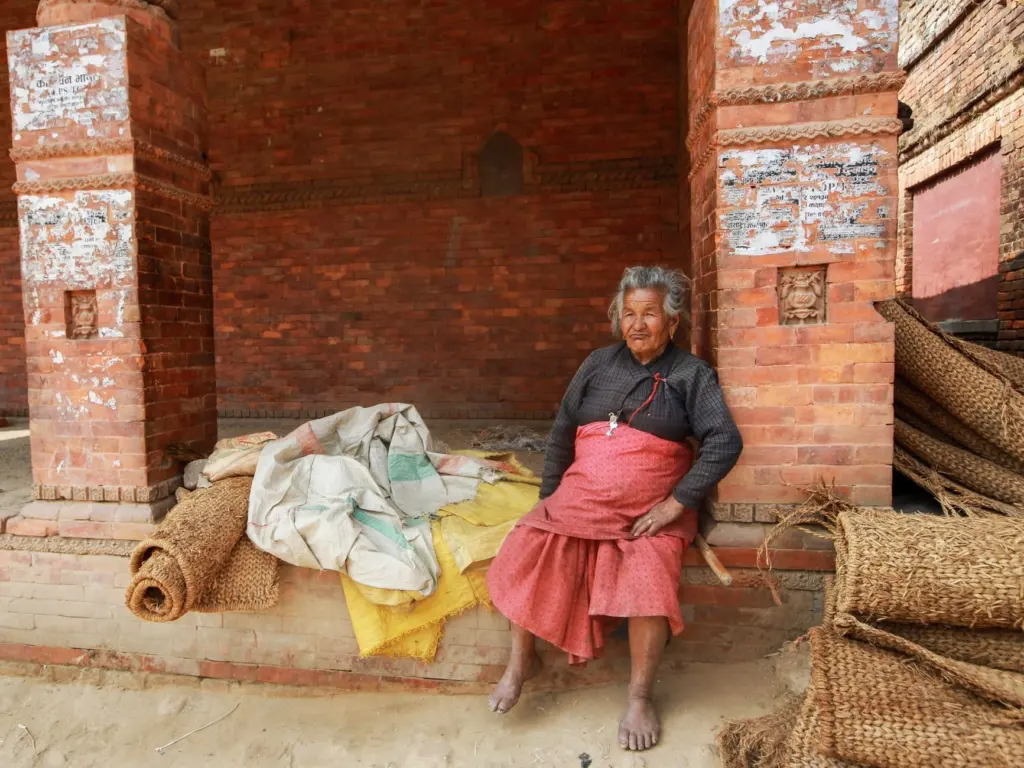
Woven mats, straw and other locally sourced material add cushioning and some insulation at low cost, and they let families contribute to their own shelter. They suit a top layer over a barrier. They do not suit direct contact with damp ground, where they hold moisture and can rot. For ideas that keep cost down, read about low cost flooring for emergency housing, and for building methods using what is at hand, how to make a floor for an emergency shelter.
Which floor suits which family
- Short stay, dry ground: sheeting with a mat on top is usually enough.
- Wet or flood-prone ground: a raised platform over a drained pitch, with sheeting beneath and a mat above.
- Cold climate: a dry base, then an insulating layer between the body and the ground.
- Long stay: a cleanable, reusable surface such as tiles, with a plan to renew parts as they wear.
- Limited supply: start with sheeting and local mats, then improve as materials arrive.
What emergency shelter flooring costs per household
There is no single per-household price that holds across responses. Cost depends on the material, how far it travels, who installs it and how long it must last. The most useful way to estimate is by line item rather than a headline figure.
One verified benchmark is useful for framing the budget: Anzen Housing reports that the structure cost is often less than half the total deployment cost. For a household budget, that implies the tent or shelter is only part of the spend, and the floor, bedding, site preparation and logistics together can make up the larger share. A shelter plan that prices only the structure risks leaving the floor unfunded.
When building an estimate, list the following separately:
- Material: sheeting, mats, tiles, pallets or local materials, each priced for the full footprint and a margin for wear.
- Transport and storage: bulky or heavy materials cost more to move than rolled sheeting.
- Installation labour: whether the household can do it, or whether volunteers or paid crews are needed.
- Replacement: with tents and shelters functional for 1–5 years depending on climate and maintenance, a floor that fails earlier adds a second purchase.
- Site works: levelling and drainage, which reduce water intrusion and so protect every layer above.
Low-cost does not mean low-value. A cheap floor that lets water through, or rots within a season, often costs more than a modestly better one. Where budgets are tight, spend first on the moisture barrier and the sleeping area, since those protect health most directly, and stage the rest. More ideas for stretching limited funds are in the guide to low cost flooring for emergency housing.
From choice to installation and upkeep
A good material laid badly performs worse than a basic one laid well. The checkpoints are simple: clear sharp objects, level the footprint, overlap sheeting so water runs away from joints, keep edges from collecting runoff, and leave airflow rather than sealing the tent tight. Frame tents can be staked in under 30 minutes by a two-person team, according to Anzen Housing, so the floor should be a task that fits that rhythm. Step-by-step guidance is in how to install flooring in an emergency shelter.
Cleanliness and hygiene
Floors are the surface that collects mud, spills and waste, so keeping them clean supports the health case for flooring. Cross-ventilation prevents mold and reduces pathogen transmission, per Anzen Housing, which makes airflow a hygiene measure as well as a comfort one. Surfaces that can be wiped, lifted or shaken out are easier to keep clean than packed earth or soaked mats. The guide on how to keep shelter floors clean covers routines.
Fire and safety
Floor materials can add to fire risk in crowded shelters, particularly plastic sheeting and dry natural matting near heaters or cooking. Choose and place materials with this in mind. The guide to fire resistant flooring for emergency shelters goes further.
Standards and other shelter types
Humanitarian agencies work to published minimum standards, and the guide on Sphere standards shelter flooring explains how they relate to floors. Not every displaced family lives in a tent: when a school gym or hall becomes a mass-care shelter, the concern shifts to protecting the existing surface, as covered in flooring protection for gym used as emergency shelter.
Frequently asked questions
What flooring works best in an emergency shelter or tent?
No single material is best everywhere. Plastic sheeting under a mat suits dry ground and short stays, a raised platform suits wet sites, and insulating layers suit cold climates. The best floor is the one that solves the worst problem on the site and can be laid as quickly as the tent goes up.
How do you keep a displaced family’s shelter floor dry and warm?
Choose a level, well-drained pitch, put a moisture barrier between the ground and the bedding, and add an insulating layer where cold is a risk. Keep cross-ventilation so humidity does not build up under the tent.
What does emergency shelter flooring cost per household?
The cost varies with material, transport, labour and replacement needs, so estimate by line item rather than expecting a standard figure. Structure is often less than half of total deployment cost, so the floor and site works deserve their own budget lines.
Is insulation or moisture protection more important?
In most U.S. climate zones, overheating and moisture buildup are more common problems than cold, so moisture protection usually comes first. In a cold climate, insulation matters as well, but it works only on a dry base.
How long should a shelter floor last?
Temporary tents and shelters can stay functional for 1–5 years depending on climate and maintenance. A floor should be chosen with the likely length of stay in mind, and plans for repair or replacement should cover longer stays.